The short answer
OHIP pays for one full eye examination a year if you are 19 or under, or 65 or over. If you are between 20 and 64, OHIP pays only when you have a medical condition that qualifies you. Everyone else pays privately, and most workplace health plans reimburse some or all of it.
It is the question we are asked more than any other, usually on the phone, usually just before someone decides whether to book. The rules are not complicated, but they have not changed in a long time and most people are working from something they half-remember. Here is the whole picture, plainly.
What changed, and when
Ontario used to insure routine eye examinations for everyone. That ended on 1 November 2004, when the Ministry of Health narrowed coverage to specific groups. Two decades later, that is still the framework, which is why a patient who last thought about it in the 1990s is often surprised.
Since then, eligibility has rested on two things: how old you are, and whether you have a diagnosed condition that affects the eye.
If you are 19 or under
Children and teenagers from birth to 19 are covered for one full eye examination every year. No referral is needed and there is no minimum age — infants can be examined long before they can read a letter chart, because an optometrist is assessing how the eyes work together and how they are developing, not asking a child to perform.
This is the group most often missed. A child who passes a school vision screening can still have a meaningful problem: screenings usually test distance sight in one direction, and a child with an eye that turns, or one eye doing most of the work, will often pass. They also have nothing to compare their vision to. A child does not report blurred sight, because as far as they know that is what sight looks like.
If you are 65 or over
Seniors aged 65 and above are covered for one full eye examination every year. The reasoning is straightforward: the conditions that quietly take sight — glaucoma, macular degeneration, cataract — become more common with age, and the early stages of all three are symptomless. By the time vision has noticeably changed, some of what has been lost cannot be recovered.
If you are between 20 and 64
This is where most of the confusion sits. Adults aged 20 to 64 are covered for one full eye examination a year only if they have certain medical conditions. The list is set by the Ministry of Health rather than by any individual practice, and it covers conditions that affect the eye directly or are known to threaten it.
The practical advice is simple: if you have a diagnosed medical condition of any kind, ask before you assume you are paying. It is a short conversation and it is worth having, because people are routinely eligible without knowing it. A diagnosis made years ago, by a doctor you no longer see, still counts.
Call the clinic and ask. We can tell you whether your situation qualifies before you come in, rather than after.
What “one full eye examination” actually means
It is worth being clear that an insured eye examination is not a sight test. A comprehensive examination checks how well you see, but it also assesses eye health and how the two eyes work together — the retina, the optic nerve and the blood vessels at the back of the eye, which is the only place in the body where those vessels can be seen directly without surgery.
That is why an eye examination sometimes finds things that have nothing to do with glasses. Diabetes and high blood pressure both leave signs at the back of the eye, and both can be found there before a patient has noticed anything at all.
Will my pupils be dilated?
Sometimes. Dilating the pupils with eye drops lets the optometrist see the internal structures of the eye properly — the retina, the optic nerve and the blood vessels. The drops sting slightly going in, and the effect lasts around four hours, during which your vision will be blurry and bright light uncomfortable.
If it is likely for your appointment, bring sunglasses and plan not to drive straight afterwards. Ask when you book if you need to know in advance.
If OHIP does not cover you
Most of our patients have private coverage for eye care, either through their employer or bought on their own, and the amount varies a great deal from plan to plan. Two things are worth knowing about how it works here.
- You pay us directly, and we give you an official receipt to submit to your insurer for reimbursement.
- Some insurers want a form completed and signed by the optometrist. Bring it with you and we will fill it in at the appointment rather than making you come back.
If you are not sure what your plan covers, check before your appointment. Most benefits statements list eye care separately, and knowing the number in advance saves an awkward conversation at the desk.
How often should you actually come?
What OHIP pays for and what your eyes need are two different questions, and it is worth separating them.
We recommend an annual eye examination for every patient, at every age. Our optometrists may increase or decrease that for you depending on your ocular and medical situation — someone with diabetes, or a family history of glaucoma or retinal disease, is often seen more often than once a year, and that recommendation is made for clinical reasons rather than insurance ones.
Put simply: the coverage rules tell you who is paying. Your optometrist tells you when to come.
Booking with us
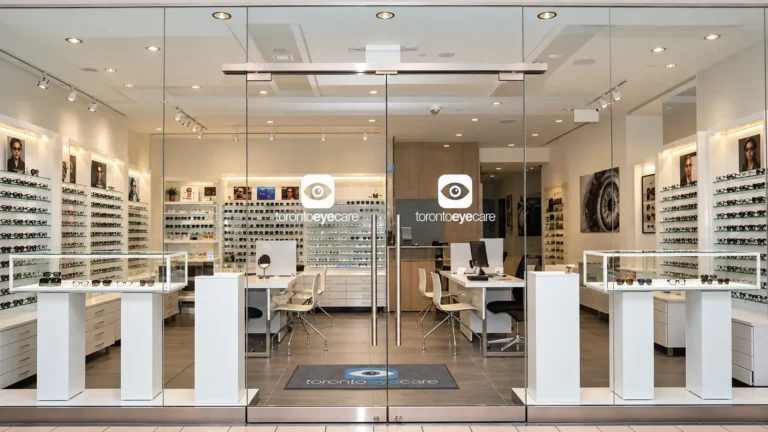
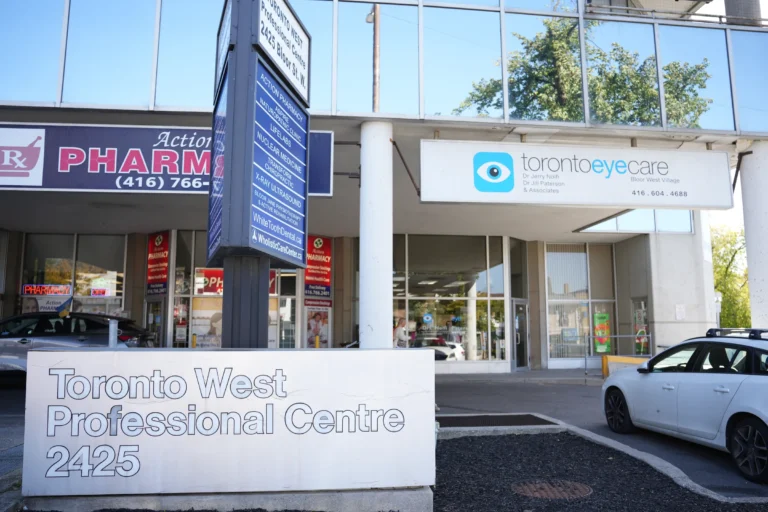
Toronto Eye Care has looked after eyes on Bloor Street since 1993, from two clinics — one at the Manulife Centre at Bay and Bloor, and one in Bloor West Village. Both are on a subway line and both run full comprehensive examinations.
If you are not certain whether OHIP covers you, telephone and ask before you book. It takes a minute, and it is a better use of everybody’s time than finding out at the end of the appointment.
- Manulife Centre — (416) 966-1955
- Bloor West Village — (416) 604-4688
You can also request an appointment online and we will contact you to confirm, or read more about what a comprehensive eye examination involves before you come in.